
Seven Best Musical Instruments For Kids To Learn
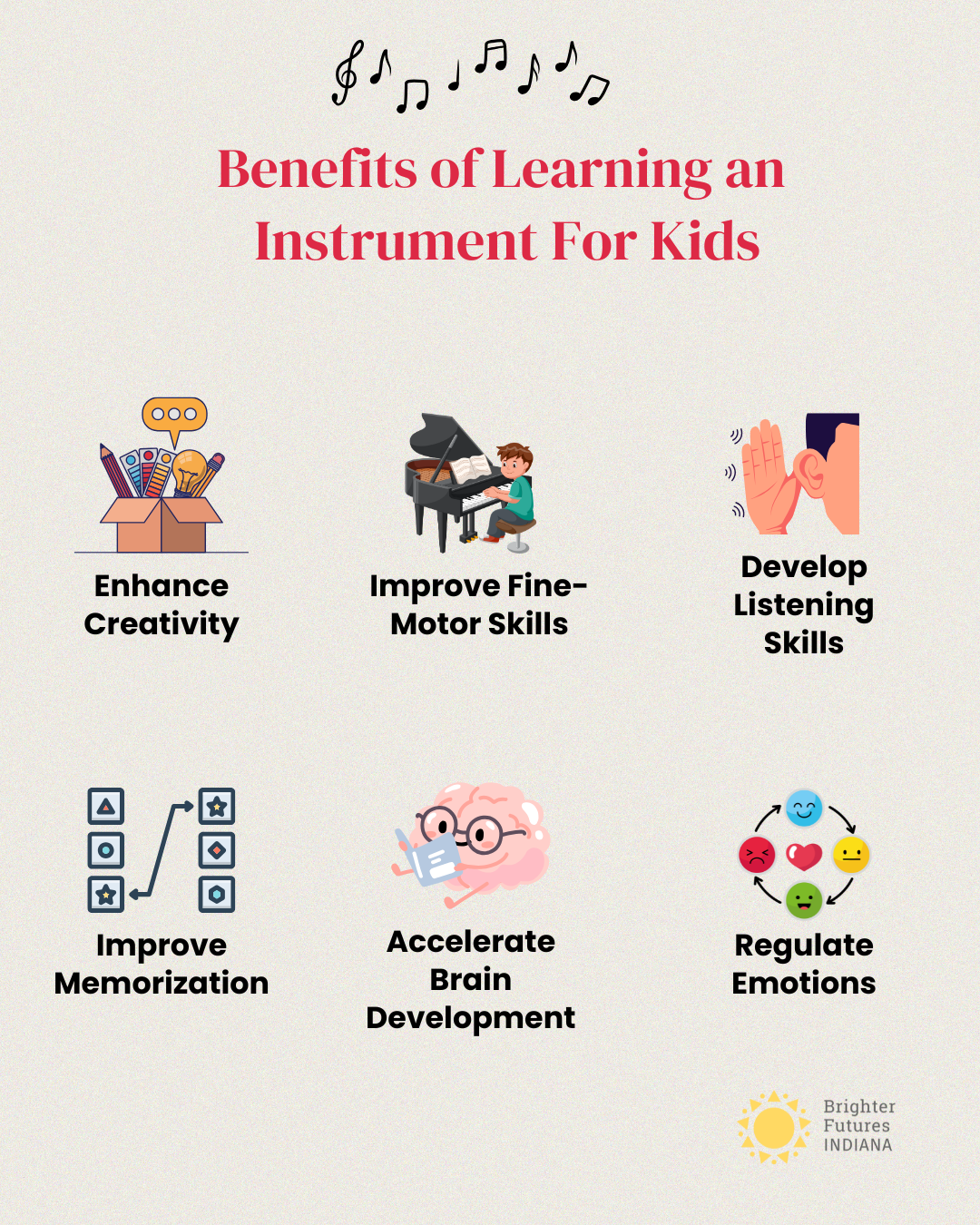
Music is more than just a fun pastime for kids; it’s a powerful developmental tool. According to a January 2025 study, music instruction in early childhood is strongly linked to improvements in memory, attention, and cognitive flexibility.
In addition to cognitive benefits, playing music can build confidence and teach kids patience and creativity. Of course, every child is different, so choosing the right instrument means considering factors like age, budget, and your child’s personal interests.
With a bit of research and trying out a few options, you can find an instrument that fits your child and sets them up to rock out on a joyful musical journey that may even last a lifetime.
In this article, we’re breaking down the top seven instruments for kids and the benefits of learning an instrument at an early age.
Top Seven Instruments for Kids
Whether it’s banging on a drum or plinking out a tune on a piano, the right instrument can ignite a child’s passion for music while teaching them valuable skills.
Below is a list of seven recommended instruments for kids. Each of these has kid-friendly qualities and developmental benefits that make them great for young learners:
Piano
Drums/Percussion
Guitar
Violin
Flute
Recorder
Singing/Voice
1. Piano
The piano is often considered one of the best starter instruments for kids. Its layout is simple and visual. When you press a key, a sound is made, which makes it intuitive even for young children. Learning piano helps develop hand-eye coordination and fine motor skills.
Pianos and keyboards also let kids play familiar tunes quickly, which is super encouraging for beginners. Parents just need to be prepared to hear “Mary Had a Little Lamb” approximately 900 times.
Best For Ages: Around 5 years and up. Many children start piano lessons in early elementary years once they can comfortably place their hands on the keys.
Quick Tip: You don’t need a full-size grand piano at home. An electronic keyboard works great for starters. Even a small, child-sized keytar could work well.
2. Drums/Percussion
Percussion instruments are perfect for active kids. Playing drums builds rhythm, coordination, and sensory awareness. It also gives kids an outlet for energy and helps develop timing and listening skills.
Best For Ages: 3 and up for basic percussion instruments. 5-7 for a junior drum kit, and around 7 or 8 for a standard drum set.
Quick Tip: Consider hand drums or bongos before a full drum kit. And as your child learns to march to the beat of their own drum, don’t forget ear protection!
3. Guitar
The guitar is one of the most popular instruments for kids and adults alike. For kids, a guitar (or its smaller cousin, the ukulele) is a fantastic choice because it’s portable and can grow with them. Learning guitar builds finger strength and dexterity as kids practice pressing strings and forming chords.
Best for Ages: Typically 7–8 years and up. By this age, children’s hands are a bit stronger and can press down the strings more comfortably. Younger kids can start on a ukulele around 5 or 6 since the nylon strings are gentler and the instrument is smaller.
Quick Tip: Your child’s fingertips might be tender at first, but encourage them to keep at it, and they’ll build calluses in no time.
4. Violin
Violin teaches pitch recognition, posture, and focus. Child-size violins make the instrument accessible even for small children. Learning the violin may also help children improve their academic performance.
- Best For Ages: 6 and up
- Quick Tip: Because sizing is so important, consider renting a violin to start. As your child grows, you can exchange it for the next size up.
5. Flute
The flute is a beautiful woodwind instrument and a popular choice for kids, especially once they’re a bit older. It produces a lovely, light sound and teaches children to control their breath and build finger coordination.
Mastering the flute also instills patience and concentration, as it can take time to produce clear notes consistently.
- Best for Ages: 7-8 and up
- Quick Tip: Remember, the sound on a flute might be airy and hollow at first. Encourage your child to keep practicing their breathing and lip positioning, and soon they’ll be producing clear, crisp sounds.
6. Recorder
Most of you probably remember the days in elementary school listening to 20-plus kids play the recorder in music class. That’s because the recorder is an ideal first wind instrument. It teaches breath control and finger placement without being too complex.
It’s also affordable and a great intro instrument to the flute, clarinet, etc.
- Best For Ages: 5 and up
- Quick Tip: Plastic soprano recorders are best for beginners. To start, use simple sheet music with just a few notes.
7. Singing/Voice
Remember that your child’s voice is a powerful instrument in and of itself. Singing is a great way to help kids learn to express themselves and build confidence. It engages the brain’s reward systems and releases endorphins, which can help children feel happier.
- Best for ages: Around 1 to 2 years old, kids start singing bits of tunes and melodies they know. By 3-5, many kids sing complete songs.
- Quick Tip: It can be easy for kids to lose confidence in their voices, so always encourage them to keep singing when you hear it.
How do you choose the right instrument for your child?
Consider developmental milestones: Around four years old, many children start to make up their own rhythms on household items. Check out our list of developmental milestones to see how kids progress with motor skills and attention span to help gauge if your child is ready for an instrument.
Follow their interests: If your child is drawn to a particular sound or instrument, start there. If they’re interested, they’ll be more likely to practice and improve.
Think about your home environment: Consider the amount of space in your home and what instrument would be most appropriate. Do you have space for a keyboard? Do you live in an apartment where neighbors may be bothered by drums? Does your child move from place to place a lot? If so, a portable instrument may be best.
FAQs
-
What are the best musical instruments for 4-6-year-olds?
Piano, drums, and voice are great choices at this age. Kids can also start with a child-sized keyboard, ukulele, or rhythm instruments like shakers.
-
What are the best musical instruments for 7-9-year-olds?
Kids in this age group can begin guitar and flute alongside piano and drums.
-
What are the best musical instruments for 10-year-olds and above?
By this age, kids are ready to start learning most instruments, including full-size guitars, drum kits, brass, and orchestral instruments.
-
What instruments are best for children with ADHD?
Instruments that allow for movement, such as the string bass, woodwinds, and percussion, are good choices for children with ADHD.
-
What instruments are best for children with autism?
Keyboards and percussion instruments can be great for children with autism. Consider electronic instruments that can be turned down to help with any sensory issues.
-
Should a child learn piano or guitar first?
Piano is often easier for beginners due to its visual layout, but if your child is excited about the guitar, start there to keep them motivated.