
How to Promote Inclusive Thinking in School-Age Kids
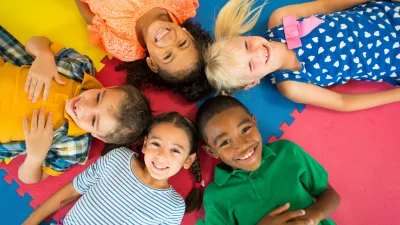
As kids grow, they start noticing the world in new ways. They see differences in how people look, speak and live – and they ask questions about it. This curiosity is healthy. It’s also an important chance to guide them toward inclusive thinking: seeing differences not as “weird,” but as natural and valuable.
Here are a few everyday ways to encourage inclusive thinking at home:
1. Model inclusive behavior.
Kids are always watching. The best lessons come from what they see adults do. Treat people from all backgrounds with kindness and respect, avoid stereotypes and use inclusive language. When you celebrate differences out loud, it helps your kids learn to do the same.
2. Build self-esteem and empathy.
Children who feel confident in themselves are more likely to accept others. Give them chances to feel capable, remind them they are valued and show love in both words and actions. Pair that with empathy-building: ask them to imagine how someone else might feel or talk through how a friend’s perspective might be different from theirs.
3. Be ready for for questions.
Kids are naturally curious, and sometimes their questions about differences pop up at tricky times, even in public. Rather than shushing them, respond simply and positively. If you don’t know the answer, be honest and feel free to circle back later to the topic. Over time, kids learn that it’s okay to ask and important to discuss.
4. Be prepared to navigate "tricky" scenarios.
Sometimes kids’ curiosity shows up in ways that can feel tricky for adults. They might describe something as “weird” simply because it’s unfamiliar. In those moments, you can gently explain that different doesn’t mean bad – it just means not the same as what they’re used to. If they use an inappropriate word, correct them without scolding – they’re learning, not being cruel. If they ask questions loudly in public, it can be uncomfortable, but it’s also a chance to model inclusion. A quick, positive response, followed by a more thoughtful conversation later, helps kids understand that it’s okay to be curious and that how we ask questions matters just as much as the answers.
5. Expose them to diversity.
Normalize differences by widening your child’s world. Visit museums and cultural events, read books that feature diverse characters, choose toys that reflect different races and abilities, or even connect with a pen pal. If travel isn’t possible, try global music, foods or virtual experiences at home. Exposure builds comfort, empathy and understanding.
6. Highlight common ground.
While differences matter, similarities connect us. Remind your child that all people want to be loved, make mistakes, have dreams and feel emotions. Emphasizing both uniqueness and shared humanity helps kids understand that everyone belongs.
Promoting inclusive thinking doesn’t mean a single conversation or lesson – it’s about consistent habits woven into daily life. By modeling respect, answering questions with honesty and making diversity a normal part of their world, you’re raising kids who see difference as a source of strength and connection.
Brought to you by Indiana Afterschool Network.