Transitioning Your Breastfed Baby to Child Care
Did you Know?
Licensing supports the use of breast milk for both infants and toddlers without a written doctor’s note. Talk to your child care provider about what is required.
Choose a Breastfeeding-Friendly Program
Choose a child care that is close to work or home (depending on your needs) and has experience caring for breastfed babies. As you are making a decision on a program, ask:
Do you have a policy that supports breastfeeding?
Child care programs should have a written policy indicating how they accommodate and care for families who choose to provide breast milk.
How do caregivers warm milk?
Caregivers should use a bottle warmer or warm, running water.
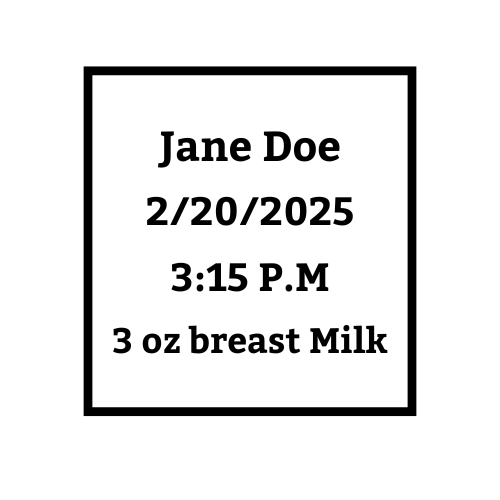
How do you ask for breast milk to be labeled?
Programs should label bottles with the child’s name and the time and date the bottle or bag of milk was prepared.
What is the time limit for disposing of unused milk? Licensed and registered child care programs must discard remaining milk from a bottle within one hour of baby drinking. Providing smaller bottles limits waste.
Can I store extra frozen breast milk here?
Most programs will let you store extra milk in the freezer. Label your milk according to the program’s policy. “Backup” milk may be stored in a deep freezer or kitchen freezer to extend storage time.
What is the backup plan if for some reason there is not enough milk for my baby?
The program should follow your lead for a backup plan, including an emergency supply of frozen milk, formula and/or calling you to come in and nurse.
Is there a breastfeeding area on premises so that I can feed my baby in person?
A breastfeeding-friendly program should offer a private, non-bathroom space for you to nurse. You should also be welcome to nurse in the child care classroom or space.
Do you have a system for writing down how many ounces of milk my baby is drinking at each feeding?
Licensed and registered child care programs are required to track infant feedings. This may be done on paper
Supporting Families who Breastfeed After 12 Months:
Child care programs should accommodate families who choose breast milk after 12 months. No doctor’s note is needed. If the program does not have a refrigerator in the toddler classroom, an alternative means of storing and distributing breast milk should be arranged, such as storing the milk in the program’s kitchen refrigerator and labeling the child’s information and classroom.
-
Prepare for the Transition to Child Care
To prepare both you and baby for the transition to child care, you can:- Define your breastfeeding goals and expectations.
- Practice pumping two to three weeks before returning to work. Pump after your morning feed or other times when your breasts feel full to get your body used to pumping and to begin storing a little bit of extra milk.
- Introduce a bottle two weeks before starting care.
- Have extra milk on hand — enough for one to two days away from baby. You do not need an entire freezer stash.
- Gather necessary supplies, including bottles, storage bags, cooler bag, hands-free pumping bra, etc. If you need help accessing these supplies, please contact Indiana 211.
-
Tips for Introducing Baby to a Bottle
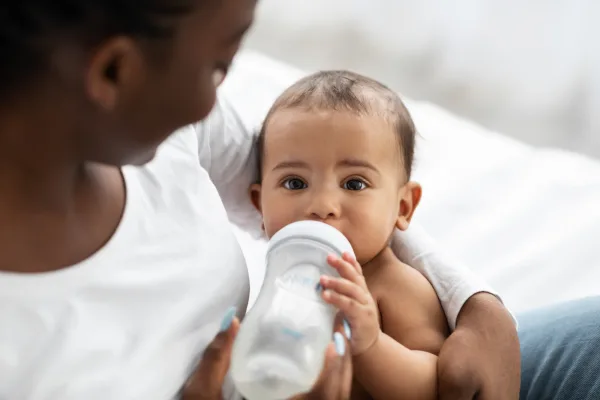
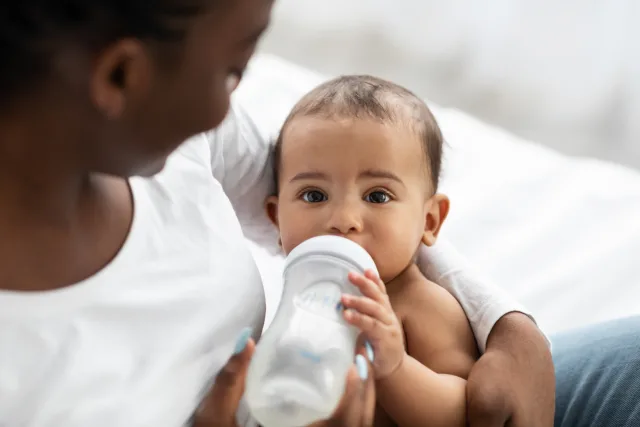
- When you return to work and your baby starts care, they will need to drink from a bottle. Babies are smart and may refuse to bottle feed from mom, so have someone else offer the bottle when you are away.
- Offer a bottle when your baby is relaxed and not quite ready for a feeding.
- Only put a small amount of breast milk (one to three ounces) in the bottle to avoid wasting milk if your baby refuses.
- No matter the age of your baby, use slow flow (size 1) or newborn (size 0) bottle nipples to better copy the flow of milk from human nipples.
- Pace the feed and let baby take control. Encourage pauses often.
- Try warming the bottle’s nipple under warm running water to near body temperature.
- Offer a bottle in different feeding positions, especially those different from your usual nursing positions. Try giving a bottle while moving rhythmically — walking, rocking or swaying. If your baby refuses, try again later.