
Thrive by 5
Focusing on Child Care Capacity, Quality and Affordability in Northeast Indiana

Thrive by 5
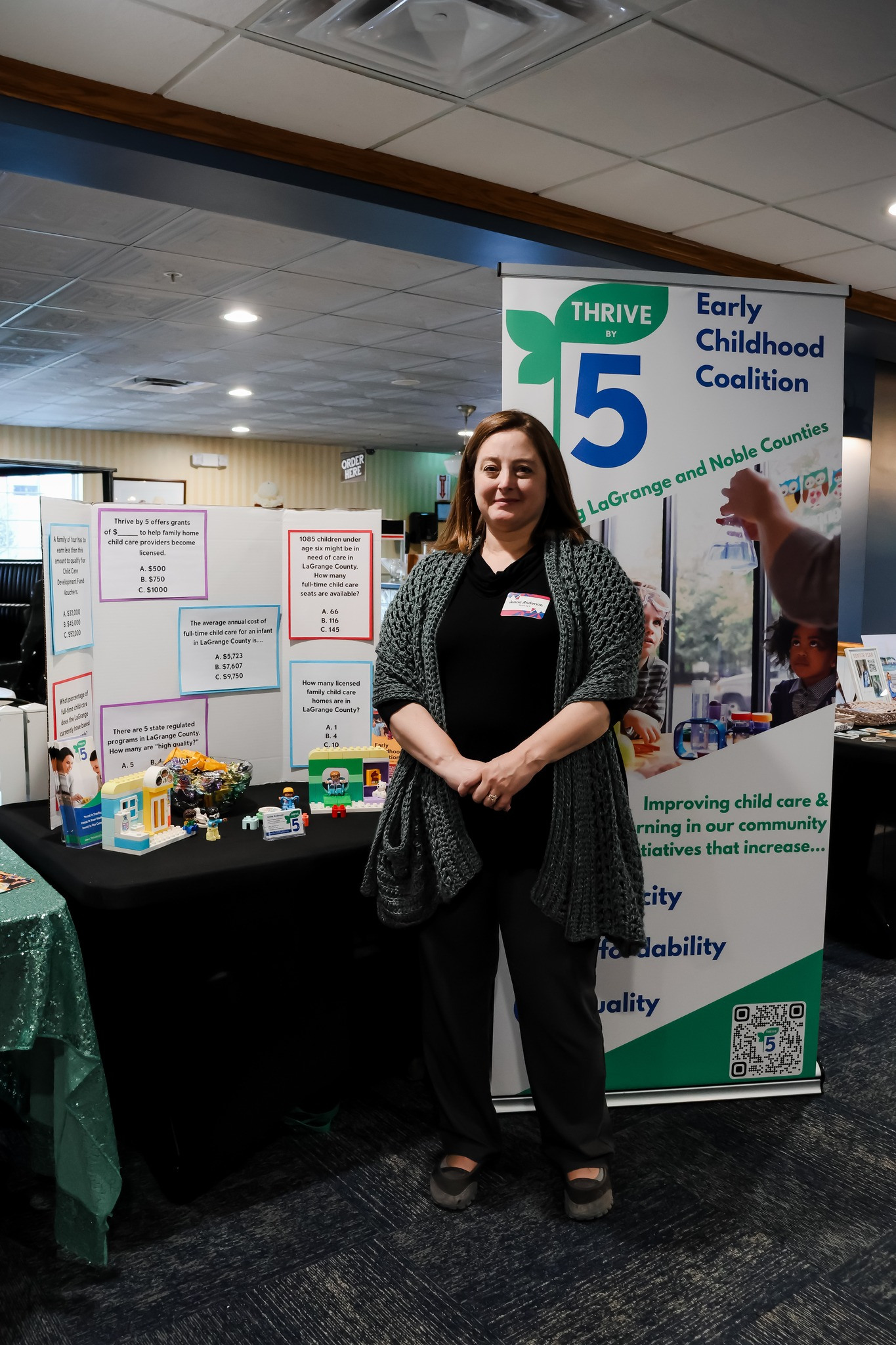
Thrive by 5, an early childhood coalition formed in 2020, serves two northeast Indiana counties but covers a lot of ground in its focus and initiatives. The coalition supports early care and education in LaGrange and Noble counties to increase capacity, quality and affordability. “A lot of the work I do is to engage people and organizations, build relationships and identify opportunities to expand child care in the community,” said Jenna Anderson, coalition coordinator. Thrive by 5’s efforts focus on several key areas:
Supporting Families
Recognizing that many families struggle to afford quality child care, Thrive by 5 launched an innovative tri-share pilot program in early 2023. The first of its kind in Indiana, the tri-share program model splits child care costs evenly among the family, the county and a parent’s employer who has opted in to the program. Qualifying families see immediate relief in their child care bills; employers benefit from employees able to focus on their jobs knowing child care needs are met.
“Building capacity can take a long time, so we are always working on that,” said Anderson. “However, we felt like the tri-share model was something we could get off the ground fairly quickly.” Seeded with a $50K investment from Noble County commissioners utilizing County Economic Development Income Tax (CEDIT) dollars, the program is currently supporting four families and expects that number to grow once eligibility expands regionally. “We have employers outside of the county asking us about tri-share – they don’t even have access to the program yet but are saying, hey we’re on board,” Anderson laughed. “They’re excited for us to grow. Our goal is to expand availability to our entire region and take it from there.”
Increasing Capacity and Quality
Another focus area is helping unlicensed providers become licensed to build high-quality seat capacity. Thrive by 5 provides grant funding to child care home providers who are working toward becoming licensed or increasing their licensing level. Funds can be spent on home repairs or renovations needed to achieve licensed status or on equipment, educational curriculum or professional development expenses. “We have made really great strides with our home providers,” Anderson said, “and the grant funding has been instrumental in helping providers remove any barriers to licensing.”
Thrive by 5 has worked closely with local partners to support in-home providers in meeting requirements and making improvements. "We would walk through the homes together and go over checklists with providers side-by-side and find ways to support them,” Anderson said, highlighting a recent collaboration to make the child care home checklist easier to understand by linking to key documents and adding explanations throughout.
The coalition has identified ministries as another area of opportunity to increase quality and is currently conducting in-depth needs assessments with three registered ministries. Guided by an outside consultant, the ministries are taking a fresh look at challenges and opportunities to ensure their facilities are adequate and operating under a financially sustainable model.
Workforce Development
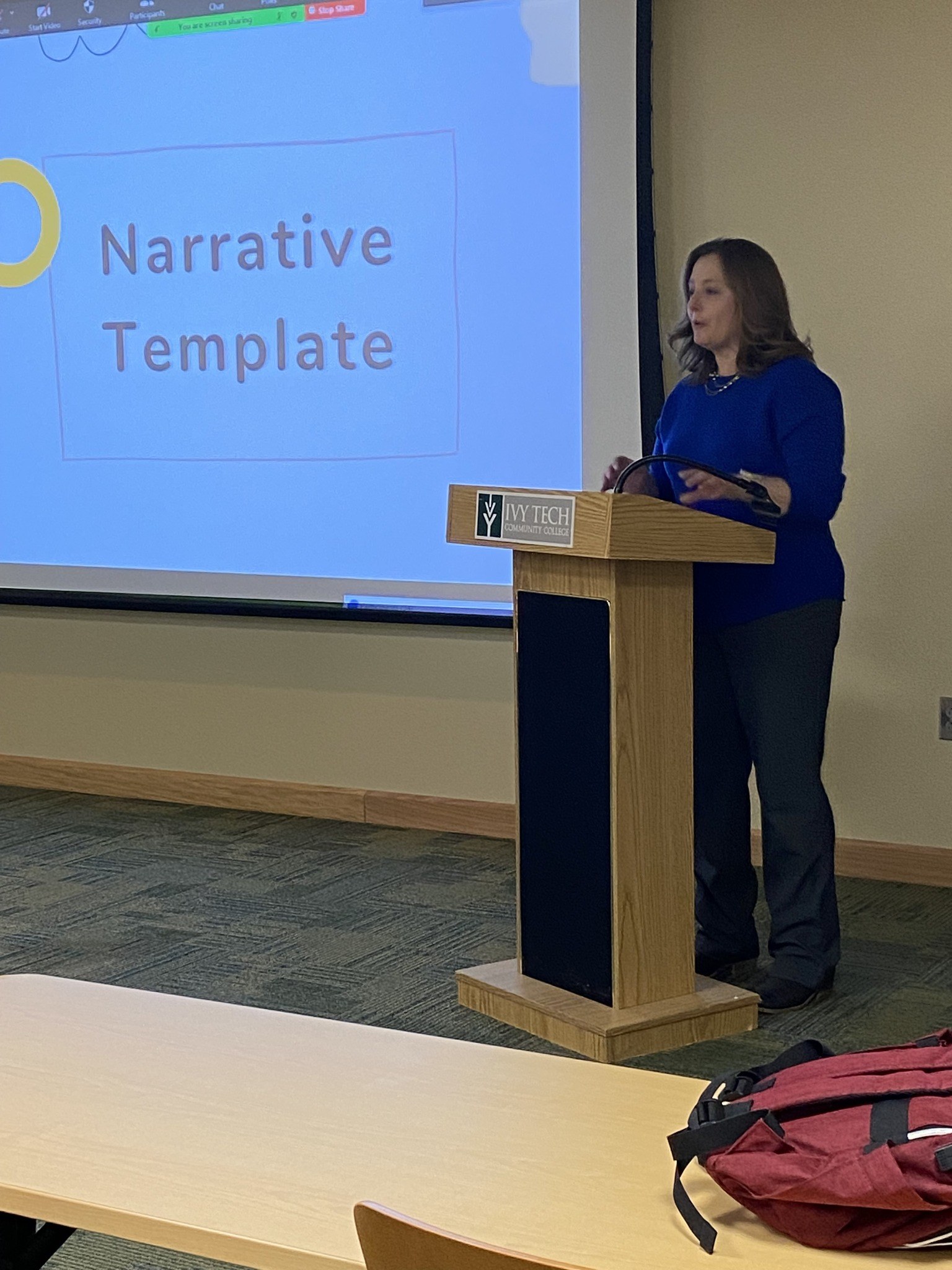
Building a skilled and dedicated educator workforce is a critical component of any child care program. Thrive by 5 worked with Lakeland School Corporation in LaGrange to launch a Child Development Associate (CDA) credential program, with six students joining in the first year. “For our small school district to have six students who wanted to participate in a brand-new program is fantastic,” Anderson said. Students who stay in the program will graduate with their full CDA, a first for Lakeland’s career and technical program options. Anderson is also working to raise awareness of resources available to support students interested in early childhood education, attending school career fairs and partnering with Indiana AEYC to highlight opportunities such as the T.E.A.C.H. Early Childhood® Indiana scholarships, which can cover up to 90% of tuition expenses for those earning a bachelor’s degree in early childhood education.
Reducing staff turnover is another goal. “We’ve learned that the culture of an organization and professional development opportunities are huge things we need to pay attention to,” Anderson said. “If we look at programs that are expanding and have low turnover – it’s their culture, it’s the support they offer their teachers.”
“We’re working on developing a road map that can help organizations ensure they’re creating that positive work environment for their staff.”
Jenna Anderson Early Childhood Education Coalition Coordinator at Thrive by 5
Turnover can impact in-home child care as well if a provider decides to move or close. Thrive by 5 is exploring a model where a county organization, such as an economic development corporation, would purchase and renovate facilities that could be leased to child care providers who want to operate in-home centers but lack the space. “If a provider decides to change paths, the county would still own a child care-ready facility that could be leased to another provider,” Anderson said.