Understanding the Science of Reading
Reading is a skill we have to learn—it’s not something our brains are born knowing how to do. That’s why children do best when they get clear, evidence-based instruction. The science of reading is not one curriculum. It’s a large and growing area of research that explains how children learn to read and why some teaching methods work better than others. This research, based on decades of studies in education, psychology, linguistics and neuroscience, shows the skills kids need to succeed in reading and the best ways to support all learners, including those who find reading hard.
For families, learning about the science of reading can give helpful, practical ways to support early literacy and build strong partnerships with schools.
Why It Matters
Unlike speaking, reading doesn’t happen naturally. Children need structured teaching to connect letters and sounds and to develop the skills to become confident readers. The brain develops quickly in the first five years of life, setting the stage for future learning. When children have rich language experiences and supportive early care, they are more likely to start school ready to read well.
In Indiana, about 83% of third graders passed the IREAD-3 test in 2024. That means almost one in six students didn’t show the reading skills expected by the end of third grade. These results show why strong early reading support is needed both at home and at school.
Five Essential Components of Reading

Research shows there are five key skills for reading. These skills work together and improve over time with practice and support:
- Phonological Awareness – Hearing and playing with sounds in words.
Example: A parent asks, “What rhymes with ‘dog’?” and the child says “log.” - Phonics – Understanding how letters and groups of letters make sounds that form words.
Example: A teacher points to the word “ship” and helps students sound it out: “/sh/i/p/.” - Fluency – Reading with speed, accuracy, and expression.
Example: A kindergartener reads, “The cat is big,” out loud smoothly and with the right emphasis. - Vocabulary – Knowing and using many words to help understand what is read.
Example: At snack time, a child says, “I’m not just hungry, I’m starving!” showing they understand different words. - Comprehension – Understanding and making sense of what is read.
Example: After a story, a parent asks, “Why was the bear sad?” and the child answers, “Because it lost its friend.”
These skills grow together. They get stronger with practice at home and at school.
How Families Can Support Early Reading
Children start learning reading skills long before school. Families can help by creating a strong foundation for literacy. Simple everyday activities can build language and reading skills:
- Talk regularly – Conversations help grow vocabulary and understanding.
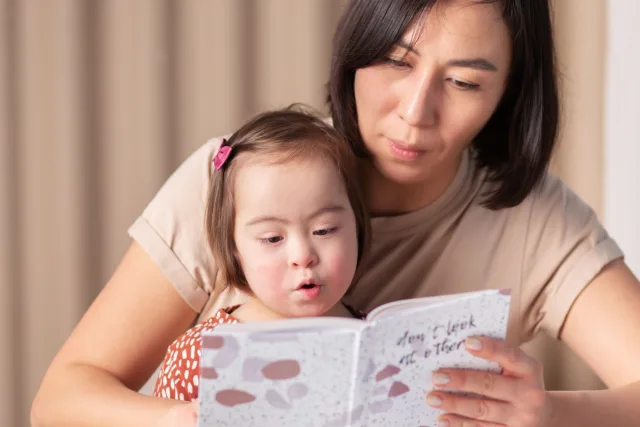
- Read aloud every day – Pick books your child likes and discuss the story together.
- Play with sounds and language – Sing songs, recite nursery rhymes or play sound games to build phonological awareness.
- Introduce letters and print in fun ways – Point out letters on signs, labels and in books.
- Encourage storytelling – Ask your child to talk about pictures, their day or make up stories.
What to Expect from Your Early Learning Provider
Good reading instruction in schools follows the science of reading. Teachers use step-by-step instruction to teach skills like phonics and word recognition, especially in the early years. Instead of guessing words from pictures or context, effective teaching focuses on decoding—sounding out words using letter-sound knowledge. This helps students read accurately and succeed long-term.
Reading Is a Life Skill
Families, teachers, and communities all play a role in helping children become strong readers. By learning about the science of reading and using everyday strategies, families can give children the foundation they need for success.
Every Page Counts. Every Moment Matters.
Help your child build a strong foundation for a lifetime of learning – starting with a story today.